; a reflection
Cerebrating on these last few weeks (yes, sometimes I do use the thesaurus), the word connection is the one that comes to mind the most, although you could argue that listening fits just as well. Library patrons, both locally and globally need to be connected and listened to in our spaces.
It’s important for students to feel connected to the library; if it is not a warm and accepting space we’ll never get students through the door. We connect with them both in our everyday interactions, where they know they can ask us for help or for a personalized book recommendation, and through social media, where I post literary memes and hype new books. I feel as if school libraries are taking a page out of the public library playbook and opening up our spaces to be community connection points, rather than simply academic study spaces.
Students need to be connected to the books that they choose to read, rather than being assigned them by a leveling system (that is arguably arbitrary). Some of the events that most help create a culture of reading are those that bring about genuine connections with others – at a micro level, things like classroom book clubs or buddy reading between classes, but in macro terms, world-wide events like the Global Read Aloud. Being able to connect with the thoughts and opinions of other readers through apps and services like Goodreads give us the ability to connect with stories and ideas that would have been unimaginable even twenty years ago. We also need to be able to connect students to resources that exist both inside and outside of the library walls – whether digital, or through connections with the public library system. More and more we see that our clients (students and staff) need to be able to make connections between themselves and the characters of the books they are reading – culturally relevant texts and learning materials are integral to creating a culture of reading.
When it comes to my own personal development, the need for connections continues. No learning is done in isolation. In order to learn we must live in a community (physical or digital) that allows us to interact with the thoughts, words, images and ideas of others. These shared connections are what truly makes all learning possible. Through my research for this course, as well as the wonderful suggestions of my peers, I can connect through local organizations, or international ones like ISTE. Twitter, Facebook and blogging platforms both offer free options (if you consider the gathering of your personal data worthless) for personal Professional Development and the ability to connect with other Teacher-Librarians throughout the world. Without other individuals to connect and share with, we would be limited to our own innovations – but it’s the connections and collaborations that allow new ideas to flourish and problems to be solved.
As Teacher-Librarians, the first step to sharing our learning with others is by connecting with our peers and getting to know them as individuals. Being adaptable and flexible is necessary, because people are more likely to engage with something that they see as having a connection to them personally. We need to make connections between what we learn during our own professional learning and what will be useful/relevant to the teachers we work with. We need to make time to connect with these people to share, and we need to connect with them at a level that meets their level of skill and interest. In my experience, the best PD opportunities have been the ones that have allowed teachers to connect with each other and share their ideas and experiences with one another. Connecting over food came up countless times while I was reading through other blog posts. There are so many more options for ways to connect with people, whether through collaboration, lunch and learns, book studies, ed camps, or PLNs. It is only through connections that relationships are possible, and these relationships are the best way to create a collaborative work environment.
When looking at global libraries, especially in areas home to marginalized populations, connections again resurface as a recurring theme. It is especially important that we connect with individuals in these communities when creating solutions – we don’t simply want to pass off our problems (weeded books, for example) and end up creating unintended economic consequences for parts of the world that are already struggling. We are all connected, and ultimately what negatively impacts one of us, negatively impacts all of us. Modern technology has made it possible for us to connect and interact with people half a world away from us, and to benefit from and hear their solutions to their local issues. It is the issue of connection that struck me the most in my study of the issues faced by libraries in the developing world. These libraries, just like our own, are connecting spaces for their communities, and they are frequently the best sources of internet connections in their communities. Instead of relying on dated texts as information sources, these libraries want access to high quality digital resources. These resources would leave these communities connected to the world, rather than at the whims of our leftovers.
Mobile technology has changed the way that the world connects and has opened the doors of literacy wide open. Before this week, I had never thought about how mobile phones were a gateway to literacy – I took for granted that people could access books, and I minimized the impact that multi-use devices could have on female literacy. But mobile phones are a multi-purpose device, and they connect people to a world of information, including stories to read to their children.
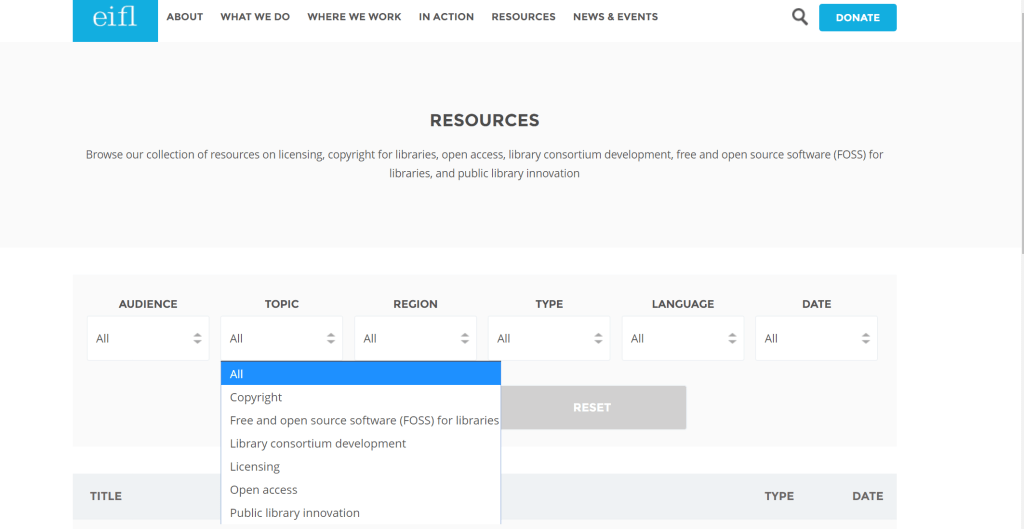
While reading my way through feedly, I was able to find a wide range of global initiatives that work to connect libraries across the globe to important information. I was struck particularly by Melissa Hunt’s post, which alerted me to the existence of Electronic Information for Libraries (EIFL). It is a global organization that connects librarians around the world to technology and information. I was especially struck by their website because the site was truly accessible and would not require top of the line devices to access it – the website offers a text only option that would make access possible on older models of cell phones, or older web browsers. This accessibility makes connection a possibility for all. They also connect users to Free and Open Source Software, along with other important topics for library development.
I think this process has only served to strengthen my interest in digital storytelling. I see it as a great way for us to tell our stories, and to connect with others. Despite differences of access to resources, libraries are connected by a common goal. The same goes for people as well. There is power in story as a tool of connection. I will be mindful of this as I move on to the next stage of this course and begin to work on my vision of the future assignment. I want to create something that will help teachers and students connect with new technologies and connect with one another.
Ultimately I think, Libraries are a place of ubuntu; to borrow from Archbishop Desmond Tutu. We realize our interconnections and support others in accessing what the world has to offer. This vision is what I want to bring to our future.
“Ubuntu is very difficult to render into a Western language. It speaks of the very essence of being human. When we want to give high praise to someone we say, ‘Yu, u nobunto’; ‘Hey so-and-so hasubuntu.’ Then you are generous, you are hospitable, you are friendly and caring and compassionate. You share what you have. It is to say, ‘My humanity is inextricably bound up in yours.’ We belong in a bundle of life.”
Tutu, D. (2000). No Future Without Forgiveness. New York, NY: Image/Doubleday.
Sources
EIFL. (n.d.). Retrieved from https://www.eifl.net/
SirsiDynex. [SirsiDynex]. (2016, October 6). Library Connections Video. [Video file]. Retrieved from https://www.youtube.com/watch?v=e6m1rTDiqlI
Tutu, D. (2000). No Future Without Forgiveness. New York, NY: Image/Doubleday.
Image Source
Internet connection map. [Photograph]. Retrieved from Encyclopædia Britannica ImageQuest.
https://quest.eb.com/search/132_1372851/1/132_1372851/cite
 themarksey blog
“We belong in a bundle of life.” That is such a joyous and evocative statement, and fits your examination of ‘connection’ so well. I immediately agreed vehemently inside my heads with your declaration that school libraries are striving to become more like the community-focused, connection-rich public libraries of today. It is so exciting to be a TL now and be part of this change. Thanks for such a well-articulated post!
LikeLiked by 1 person
You have made such excellent connections here with regard to our learning from phase 2. I appreciate your reflection and insight and look forward to seeing how you continue this work with your Final Vision Project.
LikeLiked by 1 person
Yes! Connection! As I was reading your post, I found myself nodding my head and seeing the activities we’ve had to do in the last few weeks in a different light. It is so interesting to see how you interpreted what we’ve learned….all leading to the fact that libraries are a place to develop connectedness. I guess this is the point of inquiry, taking a “big question” and using our own personal lens and findings to create meaning that connects with us. Such rich learning!
LikeLiked by 1 person
For my post, I’d like to just say, “What Morgan said . . .”
No, seriously — your insights and reflections are personal, intelligent, and accessible. I really “connect” with them!
I agree with Bronwen, too — it’s these connections we get to make as TLs, part of the job description now, but such an important element.
LikeLiked by 1 person