; the role of the library in building a culture of reading
Warning folks – I have a lot to say about reading. Who would imagine that there would be passionate readers in a Teacher-Librarian education program, am I right?
I am blessed with the best team member; a library technician who is warm and kind, a lover of books and the kids of our school. Everyone loves her. Kids. Teachers. EAs. Custodial staff. Visiting parents. Between the two of us, we have spent a lot of time building relationships with our students and making the library a warm and inviting place that students want to be. I think that ultimately, this culture and passion for reading are the keystone species of our strong reading ecosystem – everything else is just a tool to get us there.
What follows below is a list of things that we are doing, and that we would like to do, and what we struggle with when it comes to engaging our school population in reading:
Physical Considerations
We used to have a leveled-book section available to students in our library. Getting rid of it was one of the first things that I did upon moving into my role as Teacher-Librarian at the beginning of the 2017-2018 school year. I went out for a steak supper to celebrate its demise.
This article, posted by the School Library Journal this week, does a good job of summing up some of my concerns about leveled reading. One of them is that different leveling systems place a book at vastly different levels. One favourite in our library, Smile by Raina Telgemeier, can be rated anywhere from a Grade Two to a Grade Eight reading level. So… what is that level really telling us?
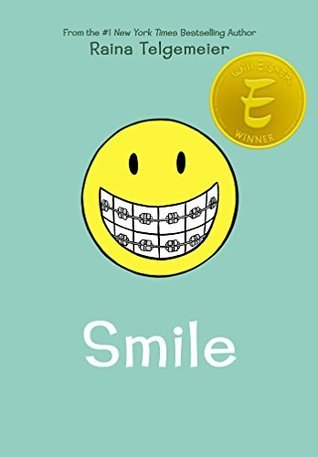
Now, I believe there is definitely a place for leveled texts in education; some of our now homeless collection were shared with our Resource and EAL teachers, others with classroom teachers, many were permanently weeded, ones in sets were combined into a guided reading collection, and those with good circulation stats and eye appeal were added to our regular collection. Under the previous T-L, several classes had been required to take out 2 or 3 “good fit” books from this collection, and observations/conversations with students told me that they hated it. It was the one way I decided to rock the boat my first year in the position. To soften the blow, and for teacher reference, I created lists in Destiny Collections of books available at various levels that could be found amongst the general collection. In our school library, students were not going to be forced to take out books from a special section. Students would be free to take out materials based on their interests, because all books are leveled books, and part of our job in the library is to help make sure that students can make the call of what a good fit book is independently. And just as much our job is to make sure that we have books that they want to read. Motivation is a key aid in determining whether a student will even try to understand something they read.
It wasn’t until a year later that I really had the data to support my actions. Those leveled texts had made close to 1700 of our yearly circulations, but despite eliminating those call numbers from our collection our circulations were up by over 500. Bless the power of choice.
The next year our goal was to genrefy our fiction collection. It took a village of volunteers to make it happen, but by May (without closing the library, I might add) we had it done. And our statistics are once again showing us that we have made the correct choice. Our circulation stats for this year and last year show that we are up over 1600 circs, and that was only at the year’s halfway point. We are seeing kids who used to only take out Wimpy Kid books from the library widen and select texts from the Humour genre. Ultimately, what it has helped allow us to do is make the library a more accessible space for students who struggled finding a place to even start looking. This article from the School Library Journal is a great overview of things to keep in mind. Because ultimately, the first step in creating a culture of reading must be getting books into the hands of students.
Connections
The Global Read Aloud has been a success in building a culture of reading in the school, and any other books written by GRA authors are amongst our most circulated novels. Teachers between Grades Five to Seven take part in it yearly and have mystery Skypes with other classes reading the novels. It’s a great way to bring the world into our classrooms, and the titles are always #ownvoices and progressive. I would like to see our Grade Eight and Nine classes get involved; while I always get sets of the YA GRA novels for our Book Club collection, I have had no success in encouraging our team at that level to take part. I’ve found it especially challenging with Grade 9 classes, who only see their students for six periods a cycle and don’t want to ‘lose’ their time.
Our Grade Seven team has created a final assessment for the year that really focuses on community and reading. Students are partnered with a nearby elementary school student, and several times over the course of the year they meet up for buddy reading times. This is tied in with a study on what makes effective picture books, as well as an interview with their buddy – and after they complete this they spend May-June drafting and producing a special picture book based on their interests. Their last buddy reading period is spent reading and sharing this specially written book.
Digital Books
While we haven’t moved towards ebooks, except those that can be accessed by educators from the Province of Manitoba’s Online Resource Library, we have started growing a collection of digital audiobooks for students to sign out online. They have been well used, but we struggle with some limitations from Follett – especially that they require internet access to listen to. This is unlike the OverDrive system that is used by the Winnipeg Public Library, where for the loan period the digital files exist on the individual’s personal device which allows them to listen to them without internet access.
Classroom teachers often use their free Epic! accounts as Listen to Reading stations during classroom reading/Daily 5 time. I run workshops in the library to help students access the free digital resources from the Winnipeg Public Library; resources that would be too expensive to provide at a school level, but which are provided free of charge for Public Library members. The school does have memberships for RAZ-Kids and Reading A-Z that are primarily used for supporting EAL and students at the five-six level. Many of the teachers who were fond of the leveled library use this in their classrooms for students requiring a more targeted intervention. I’m not sold on whether they add to the culture of reading, but they are being used as an instructional tool, and it is a handy resource for parents who want to have something their child can “do as homework”.
All books welcome
We have really upped our game in terms of Graphic Novels and Manga over the past several years. 6.84% of our collection is a Graphic Novel or Manga, but these books make up 27.75% of our circulations. We have been working on adding graphic novels and picture books into our book club sets as well. I am currently heavily weeding our non-fiction collection, but we are focusing collection development in the area of gaming. I am certain that every book I put in our library about Minecraft, Roblox or Fortnite has multiple holds on it. I have probably added 20-30 new titles in this area so far this year, and I still can’t outpace demand. Student recommendations also usually make up a significant part of our book orders.
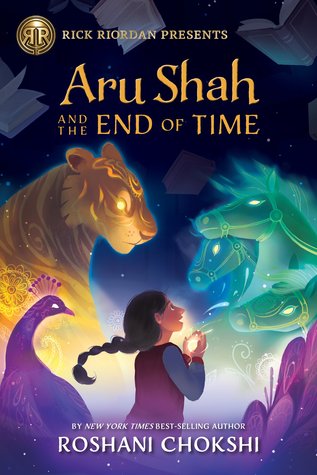
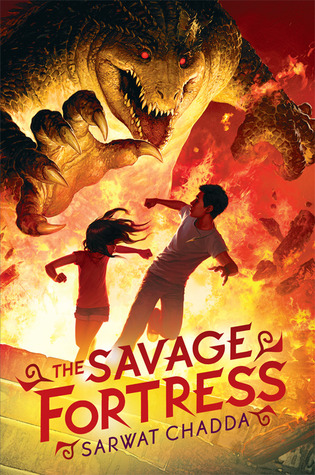
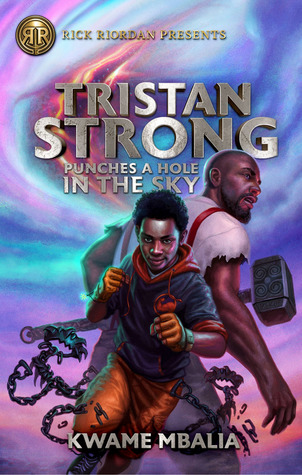
My professional development goal my first year in the library, and a continued focus every year since, has been in having the characters and topics of the books in our library reflect the diversity of the community that we live in. For example, our Grade Eight team has consistently done a mythology themed literature circle unit, and our collection skewed heavily to Greek and Norse mythology. Adding titles like Sarwat Chadda’s The Savage Fortress, Roshani Chokshi’s Aru Shah and the End of Time, and Kwame Mbalia’s brand new Tristan Strong Punches a Hole in the Sky has breathed new life into the study and is truly more inclusive. I really recommend the site weneeddiversebooks.org as a starting point in your search for books written by and featuring Black and Indigenous People Of Colour (BIPOC) and LGBTQ* persons.
Last year, borrowing an idea from Chapters Indigo, we got a giant stack of Staff Picks stickers made online and had staff members pick some of their favourite books to tag and sign. I’m hoping to extend this to our library advisory committee in the future. Kids seem to search out their favourite teacher’s choices, and it’s been a great way to pull students towards some classics.
In previous years, our library has been heavily involved in the Manitoba Young Reader’s Choice Awards, but to add some new variety we cut down how many copies of these books we purchased and have also invested in the Ontario Library Association’s Forest of Reading books. Kids have particularly liked the non-fiction options available in this program. These awards are familiar and well promoted within our division, which means that kids know to look for them, and thus they are well utilized.
Social Media
I use Goodreads ratings heavily when talking or otherwise advertising books, and have heavily encouraged students to download the app. The scan feature is probably my favourite thing about it, and I work it in with my Grade Eight and Nine classes during their orientation at the start of the year.
We do have a new book section in the library, but because new books tend to not stay in the library for long, I have been using our library Instagram to talk and promote new books. I will admit that I also post a lot of semi-school related memes and puns – but those are more a hook to snag some students who might not be drawn to follow the LLC otherwise. It sort of makes me feel like I’m one of those parents who hides vegetables in chocolate chip cookies. I’ll run fun promotions for first access to popular new books out of the Instagram account as well – like this one we did for Diary of a Wimpy Kid: Wrecking Ball.
Room for improvement
I think we have significant room to grow in creating a culture of reading non-fiction books. That side of our collection is really struggling to hold interest; with access to the internet and the subscription services, I’m finding that there is significantly less demand for many curricular topics. Teachers aren’t using our informational texts, and honestly they aren’t very interesting or engaging. Promotion of narrative non-fiction has helped, but I feel like there is still much to do. I found this article through the School Library Journal, which focuses on the five main types of non-fiction, and I think our space would be best served by browsable and narrative texts especially.
I have also been playing around with the idea of inserting QR codes for Flipgrid into the front of books and inviting students to post a short video review after reading, which with student permission could be played on our daily news broadcast. This idea came from someone on the “Future Ready Librarians” Facebook group, which is a pretty frequent source of inspiration – it’s like daily PD on my couch.
I also feel like I can do better in promoting books to staff. I’ve tossed the idea out there of running staff book clubs on new and exciting YA/Children’s novels so that staff can expand their repertoire. Global Read Aloud has gotten a few of our staff to bring new books into their class reading options – it would be nice to add more to their toolkit. If we use new titles in our literature circle/book club collection, hopefully we can hook teachers (and then students) on these new materials as well.
A section of the website of the National Library of New Zealand on the role of libraries in building a reading culture mentions many tips to building a reading culture. One of them is using school assembly time to promote books. Because of some major school construction projects, we haven’t been able to hold a whole school assembly yet this year, but I would love to be able to use my Library Leader group (grades five to seven), and Library Volunteers (grades eight and nine) to promote books they love. This could also be completed on our morning video announcement show “Live at Leach”.
In their article “Building a school reading culture”, Merga and Mason tell us that having a staff that reads was reported by Teacher Librarians as a huge contributing factor to having a strong school reading culture. Here I have room to develop as well. Some teachers report having no time with the marking they “must” keep up with, others have too many things on their plate outside of school with young families, and others will readily admit to not having any interest in reading. In this same article, one of the interviewees reports that they view the staff at their school as their clientele just as much as the students. This really resonated with me. This interviewee set up a section for staff pleasure reading in the library, and stock it with 30 new adult reads before breaks (Merga & Mason, 2019, pp. 182-183), and put up advertising in staff rooms and in staff bathrooms. This is an easy first step, and one that I can easily incorporate into my practice.
Sources
D’Orio, W. (2020, February 3). Reading Levels Unfairly Label Learners, Say Critics. And Then There. Retrieved from https://www.slj.com/?detailStory=Where-did-Leveling-Go-Wrong-leveled-reading-lexiles-AR-libraries-books-fountas-pinnell
Merga, M. K., & Mason, S. (2019). Building a school reading culture: Teacher librarians’ perceptions of enabling and constraining factors. Australian Journal of Education, 63(2), 173–189. https://doi.org/10.1177/0004944119844544
A school-wide reading culture. (n.d.). Retrieved from https://natlib.govt.nz/schools/reading-engagement/understanding-reading-engagement/a-school-wide-reading-culture
Stewart, M. (2018, April 4). Understanding-and Teaching-the Five Kinds of Nonfiction. Retrieved from https://www.slj.com/?detailStory=understanding-teaching-five-kinds-nonfiction
We Need Diverse Books. (2020, January 24). Retrieved from https://diversebooks.org/
Witteveen, A. (2019, September 25). Ditching Dewey? These Ideas Can Get You Started on Genrefication. Retrieved from https://www.slj.com/?detailStory=ditching-dewey-libraries-These-Ideas-Can-Get-You-Started-on-Genrefication
Cover Image Source
Teacher Reads to Students in Day Care. [Photography]. Retrieved from Encyclopædia Britannica ImageQuest.
https://quest.eb.com/search/139_1970636/1/139_1970636/cite 807/1/139_1972807/cite
 themarksey blog
Wow Morgan, your passion exudes through this post! I 100% agree with your de-levelling of books in your library space. Although there is a place for it in schools, overall, students have choice in what they read. Here is another great article about reasons to rethink levelling of books. Although it pertains to classroom libraries, I think it relates to libraries as well. https://www.weareteachers.com/leveled-libraries-outdated/
LikeLike
Thanks for the article Tania!
When kids are truly interested in something, they are willing to push themselves to comprehend a text that might have otherwise been written off as too difficult. And that growth happens when we push ourselves and are interested, I think.
LikeLike
Hi, Morgan,
Awesome post! The research and experience you’ve shared are truly helpful. I particularly appreciate the video of how to use the Goodreads scanner. I will definitely have to check that out! I also appreciate your sharing what types of information you share on social media and how you rope in students — we are exploring that very idea, and seeing what others have done is helpful and inspiring 🙂
I hear you on lamenting on the lack of non-fiction circulation. At the secondary level, our numbers look good on paper because students are checking out books as they relate to the various projects and essays they need print resources for. However, if we were to weed those out, the amount of nonfiction books that are checked out for just pleasure reading would be dismally low. We have not yet genrified our library, and are looking into it, starting with pulling all memoirs. The article you found about the five types of nonfiction is a good place to start when considering how one might organize.
We are in a similar place with ebooks. We have a few audio books, but I have been exploring CELA and NNELS for accessing books for student with reading disabilities as well. Our public library provides these resources, but our school is far from the public library, and many students don’t go. Rather, we are exploring having our public librarians come in to show students how to use the Libby app to help provide more access. How often do you find students reading on a device vs print copy at the middle school level?
LikeLike
I’m jealous that you have teachers pushing print sources! Interestingly enough, the some of the only teachers we’ve had requesting them this year have wanted them about health and diseases – areas where books should ideally be within 5-10 years of age to be up to date, and so I end up promoting our digital subsriptions to EB School and databases through the public library to their classes, as I don’t want to be having them research inaccurate data. It’s a good conversation about choosing reputable sources though.
Our percentage of students reading on a device is pretty low – in my estimation at most 10% of a class in the upper grades, and not at all in the lower ones. My observation is that it’s mostly online comics, mother tongue books, and some on Wattpad, with a very small ebook contingent.
LikeLike
Hi Morgan,
Great warning at the beginning of the post! Sets a nice tone.
I am really intrigued by your passion for choice vs levelled readers. I am not a fan of levelled readers mainly because I find them poorly written and often a bit boring (and it gets worse when they are translated into French since easy words become difficult words and then the levels are irrelevant). The steak dinner celebration speaks to how passionately you feel about this issue!
One quick question, did you have the Staff Picks stickers made specifically for your school or where did you buy them from?
Ingrid
@mmeveilleux
LikeLike
They are boring! It’s hard to build a culture of reading around boring books. I totally understand their use in the classroom and support teachers having an idea of where their students are at so they can make sure that content materials are within a readable range for their students, or that they can provide supports.
I designed the staff picks stickers on vistaprint and had them mailed to the school. Think it cost me $30-$40. There’s a pic of them in the blog post if you go to my actual blog – the embedded Instagram images don’t show on Feedly, sadly. Once teachers signed them, we covered them with a layer of crystal clear book tape for long term protection.
LikeLike
What an excellent post! So many great ideas and takeaways. I admire that you collect stats and data to confirm the changes you are making. This speaks the important advocacy piece of our jobs. The Clips video is an excellent model for others and the Good Reads tip is also excellent. I have not shared this but will be doing so for sure! I am also ordering stickers. You have added tags and Tweeted this out. Your passion for literacy and for creating a reading culture shines through every piece of this post.
LikeLike