Storytelling for the 21st Century
This week I was working with a class of Grade 7 students on a writing project. Like many teachers, I’ve always struggled with the fact that middle schoolers often join us with a pretty set view of themselves as writers. And for the most part – it isn’t such a great one. As I struggled for the hook to catch them, and hopefully help them take more risks with their work, I remembered a video that condensed the history of the planet Earth into 24 hours. In that video, we learn that in that super shrunk day, humans have only been around for one minute and 17 seconds.
Which got me to thinking: if the history of just homo sapiens was miniaturized into 24 hours, how long have we been able to read and write? While it seems like such a long time to us, we are (from an evolutionary perspective) only wee infants. So, I crunched some numbers and if we use pre-cuneiform writing of Sumerians (3400 BCE at its earliest estimated date) as the first instance of writing, humanity has only been able to read for 39 minutes! And even then, it was a very niche skillset. In fact, over half of the world’s population has only been considered literate since the 1950s, or for 30 seconds of those 24 hours.
I hope that my speech connected with some students, and helped them realize that their reading and writing skills are truly miraculous. I did heavily emphasize that the newness of these skills doesn’t in any way excuse you from working towards improving them – just that you can be a little bit kinder to yourself when things aren’t that easy.
But it also got me to thinking about how young our model of education is in terms of humanity. And how did we teach each other before reading and writing made this model possible? Through experience and story, which I hope is a thread that can be carried on as we move education towards its future.
The Assignment
After much of brainstorming, detailed in my last post here, I loosely nailed down my interest in doing some reading and research on digital storytelling, storytelling tools, multimodal forms and cognitive load management. I think that these terms could be combined into projects and activities that I could run in any classroom and/or course at my school. I’m especially drawn to the idea of digital storytelling, because I think it is just as possible to tell a story through coding, or podcasting, as it is through video applications, and that stories exist in ELA and Social Studies just as much as they do in Woods, Math and PE. There’s just something about the ways that stories bring us together that I’m drawn to – and I think it allows many ways for me to incorporate various technologies and applications.
I decided to start with a search through academic journals and papers, and stumbled upon the following articles:
What is Digital Storytelling?
1) “Digital Storytelling in Language Education”, by Hamzeh Moradi and Hefang Chen. Published December 9, 2019 in Behavioral Sciences
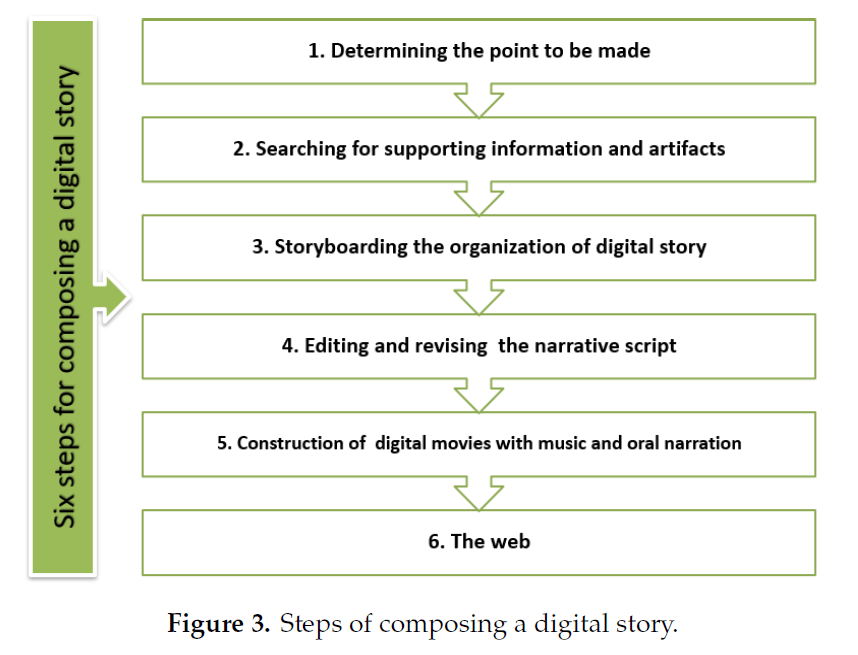
This 10-page paper, written by university professors in Guangzhou, China gives the best academic overview of Digital Storytelling that I can find on the topic. With 37 referenced sources, which also provide some useful jumping off points of their own, this paper seeks to review the use and implementation of digital storytelling in education. It gives a basic definition, sets out the benefits, explains the stages, sets out the elements of effective examples, describes the steps for creating, and discusses the opportunities for enhancement of achievement in using DST in education. I think the article provides a good foundation of knowledge on the what and why, but it still left me wishing for more of the how and with what. So, onward I must go on my search.
Why should I use DST?
2) “The effects of digital storytelling on student achievement, social presence, and attitude in online collaborative learning environments”, by Chang Woo Nam. Published January 2016 in Interactive Learning Environments
This 17-page paper written by an education professor at Dong-A University in Busan, South Korea caught my eye because one of the conclusions from the previous article was about the lack of research into the effectiveness of the format. This research, although small in study size, followed two groups of middle school students taking a chemistry course. They were split into two groups; both being taught by the same instructor. The first group took part in an online collaborative digital storytelling unit of study, while the second was focused on conventional online collaborative learning. At the end of the study, students self-reported on a survey that was used to determine three factors potentially influenced by their modes of study: their achievement, social presence, and student attitudes. While showing no significant differences in terms of achievement and student attitudes, there was a significant difference in terms of social presence. The author noted significant evidence for improved interactivity, online communication and privacy. The author does note that other studies have shown impact on achievement and attitudes with DST. Nonetheless, it was interesting to see studies and statistics that imply that DST will help students move towards achieving so many aspects of NCTEs ‘Definition of Literacy in a Digital Age’. And doubtlessly, although there is no way to quantify it, the project allows students to meet these literacy goals in many other ways.
With what do I make DSTs?
3) “30 Sites and Apps for Digital Storytelling”, by David Kaupler. Published October 2018 in Tech & Learning
After reading and annotating my way through several longer academic articles and spending some time testing the waters of YouTube, this brief one-pager was truly a sight for sore eyes. As its title clearly sets out, this is more of a list of useful websites and tools for use in digital storytelling projects. Listed options include photo narration apps, comic creation tools, sock puppets, storyboarding support, animated film apps, and script writing tools. I really enjoyed how the list was hyperlinked. I’m sure that there are more tools out there since this was released onto the world a year and a bit ago, but most seem to be established programs/apps and none that I can see are out of business. There’s a good mix of free and paid tools as well. It will give me some good jumping off points for formats and applications to test drive with students.
What can DST projects look like?
4) Twitter hashtag searches for #digitalstorytelling, by all those who Tweet. Published all the time on the internet
I’ve been making a concerted effort to dig my way into educational Twitter since the course began (and I finally reset my lost Twitter password). I’ve decided that I particularly like being able to scan through and see recent posts. By searching the #digitalstorytelling hashtag I have been able to find some prominent Tweeters in the digital storytelling movement, as well as find finished examples that students have put out to the world. These projects are great to have in the toolkit to show students as they begin to brainstorm and make their own creations to tell their own stories. The two tweets below give me examples of projects, as well as handy tips for troubleshooting during their creation.
https://platform.twitter.com/widgets.jsOur school partner @AlbaresColegio created this video to document their #socialinnovation project.
— NEMESIS – Social Innovation Education (@nemesis_edu) January 16, 2020
With limited technical resources, students, staff and parents worked collectively, using #digitalstorytelling to spread the word about their project.#nemesischangemakers pic.twitter.com/v2DVxaKGof
https://platform.twitter.com/widgets.js#digitalstorytelling tip!! If you’re ever stuck for a quiet space to record audio you can always try the chair and duvet/blanket technique! It works! Honest!! #whodhavethought pic.twitter.com/xhjHHM9dK7
— Curiosity Creative (@Cur_Creative) January 17, 2020
How do I teach people to digital storytell?
5)“Digital storytelling in the classroom: how to tell students to tell a story” by Alexios Brailas. Published January 2017 in International Journal of Teaching and Case Studies
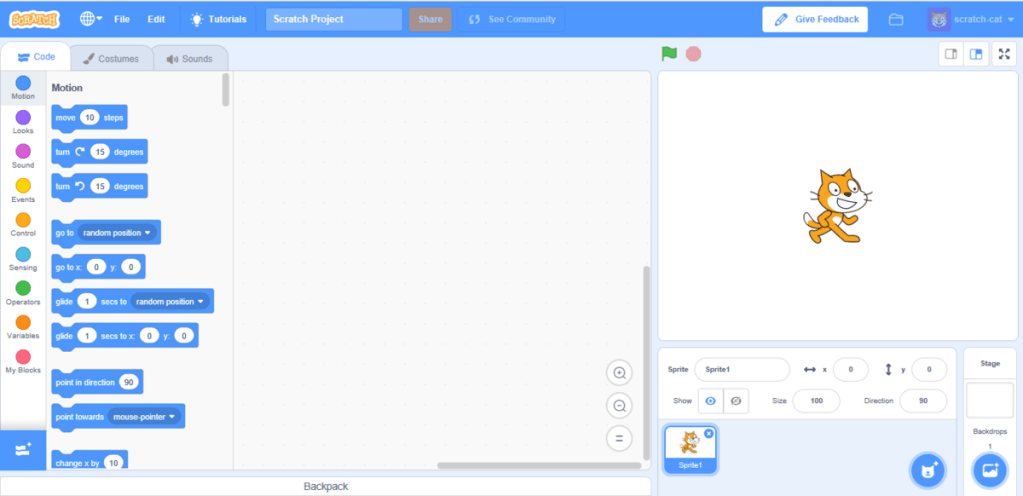
Screenshot of Scratch interface from Wikimedia Commons 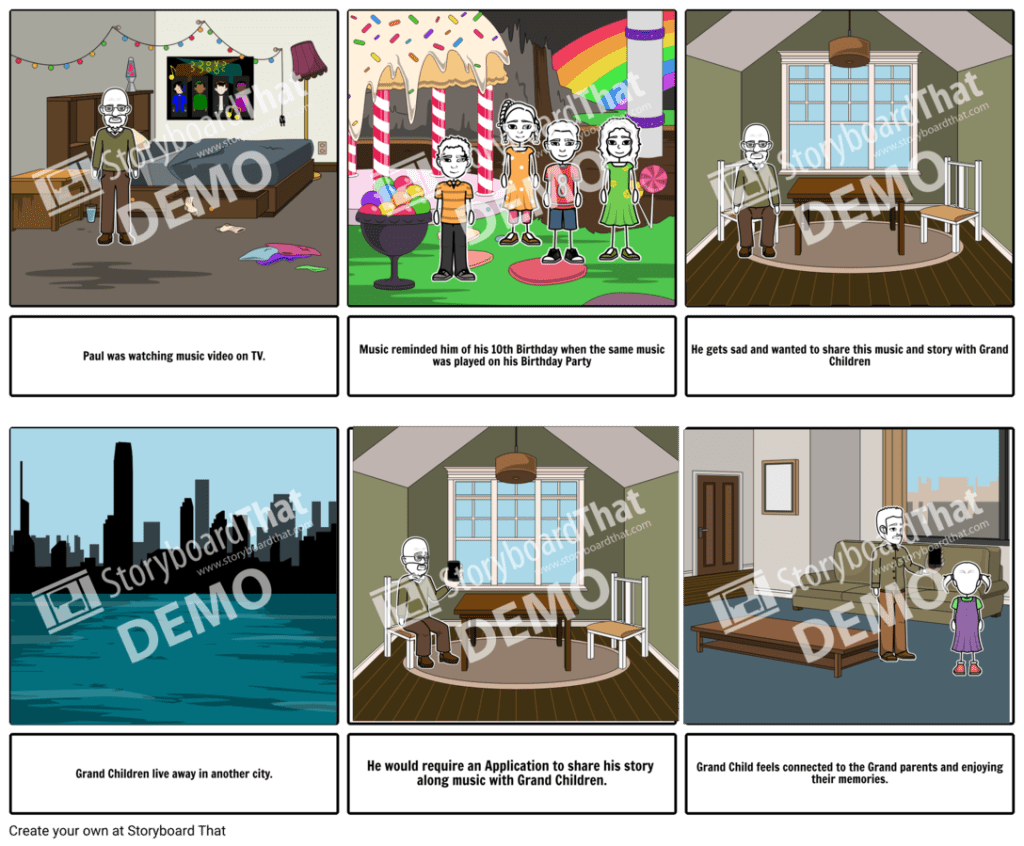
Demo storyboard image from Wikimedia Commons
After the rest of my digging around I had lots of ideas, but I was still at a loss for how to frame the process with students; and a handy Google search for “Digital + storytelling + classroom + outline” got me where I needed to go. The author shared many of my concerns and issues – many of the apps and technology required subscriptions that can be cost prohibitive, or required more time than would be available with a class. Thus, he settled on using Scratch and StoryboardThat as DST tools. While I would not probably set up assignments like these ones, I found it useful to gain insight into the thought process and steps that a teacher took while planning and engaging their students in DST work.
Bonus – How do I make one?
6) “Powerful Tools for Teaching and Learning: Digital Storytelling” a Massive Open Online Course (MOOC) on Coursera.org from the University of Houston.
I think I feel pretty okay with the idea of story-boarding and curating video, images and audio – but if I did not, I think that this would be an interesting use of my time in preparation (in practice I tend to be more of a try things out and troubleshoot as I go with students person, but for those who are not that type, this might be for them). I had heard the term MOOC in passing before, but it stuck out to me in Why School (Loc 118), and then while stumbling around on the internet here was another one directly connected to the topic I am interested in. The internet really does have everything. Maybe this is a task for my spring break?
I still need materials regarding skills for Cognitive Load Management, but ultimately, I feel like this list is a good start on my interests.
Until next week!
Sources
Brailas, A. (2017). Digital storytelling in the classroom: How to tell students to tell a story. International Journal of Teaching and Case Studies, 1(1), 1. doi: 10.1504/ijtcs.2017.10003059
Kaupler, D. (2018). 30 Sites and Apps for Digital Storytelling. Tech & Learning, 39(3), 8. Retrieved from http://search.ebscohost.com.ezproxy.library.ubc.ca/login.aspx?direct=true&db=aph&AN=132130210&site=ehost-live&scope=site
Moradi, H., & Chen, H. (2019). Digital Storytelling in Language Education. Behavioral Sciences (2076-328X), 9(12), 147. https://doi-org.wpl-dbs.winnipeg.ca/10.3390/bs9120147
Nam, C. W. (2017). The effects of digital storytelling on student achievement, social presence, and attitude in online collaborative learning environments. Interactive Learning Environments, 25(3), 412–427. https://doi-org.ezproxy.library.ubc.ca/10.1080/10494820.2015.1135173
NCTE. (2019, November 7). Definition of Literacy in a Digital Age. Retrieved from https://ncte.org/statement/nctes-definition-literacy-digital-age/
Richardson, W. (2012). Why school: how education must change when learning and information are everywhere. New York, NY: TED Conferences.
Cover Image Source
Zuni rock art that depict the celebration of corn planting and corn harvesting and how important the sun was to Zuni survival. [Photograph]. Retrieved from Encyclopædia Britannica ImageQuest.
https://quest.eb.com/search/110_364871/1/110_364871/cite
 themarksey blog
Digital storytelling is such an interesting concept. It reminded me of the narrative about the students learning to play Minecraft in Will Richardson’s “Why School,” because after all, aren’t video games a type of digital story? How can we use digital software like Minecraft and Bloxels for children to tell stories through creating characters and settings through these kinds of video game building apps and games?
LikeLike
Yes – video games are stories too! That’s one of the reasons that I make sure that books about video games and story adaptations from video games are heavily represented in our school’s LLC.
I have seen bloxels in action, but do not have any yet. I’ve got a bit of bonus Makerspace budget left – perhaps that is what I will invest it in. Imagine students creating games around concepts, or based on the problems in novels that they are reading. That could be much fun.
LikeLike
Oh my! Your blog is so much more fun than mine. I love all the video links! How did you decide to drill down into “digital storytelling” as a topic? It is so apt an entry-point to include the bigger topics we have in the course but also stay light, fun and manageable as a unit idea. I assume you started with something broader such as “digital literacy”?
LikeLike
Thanks for the compliments Bronwen – although I have to say that I think your blog looks well designed and eye-appealing, on top of having great content.
In terms of digital storytelling, I’m sort of taking the lead from a divisional initiative, along with some personal interests. I am a strong supporter of the arts, and I wanted to make sure that my project had 21st century skills but also managed to really hold on to something that honored different truths and perspectives. Sometimes the moves towards such a science and math mindset in the LLC makes me worry that we’ll lose some of the best parts of the arts.
LikeLike
This is an excellent post. It is thought-provoking and engaging. You have curated excellent resources; both from traditional and non-traditional sources. Not sure this will be of benefit but I leave this link here for you as it is one of my go-to sites for student project creation templates: https://sites.google.com/gshare.blackgold.ca/sharedresources/home
LikeLike
Thanks for this resource Darcy. It is an amazing source of ideas and templates!
LikeLike