
Just kidding, more than one can survive
Although this assignment was officially supposed to be about evaluating one reference material in our collection, and then suggesting how we could upgrade that resource, with our instructor’s support I have shifted my lens slightly. Instead, I will evaluate two digital reference encyclopedias that we have access to in the division in which I am employed; Encyclopedia Britannica School (EB) and World Book Online (WBO).
The division in which I work currently subscribes to two online reference encyclopedias that have completely replaced the gargantuan print copies that were weeded from our collection several years ago. Approximately 5 years ago (just at the beginning of my time in the library) the division moved from World Book Online to EB School as a way to reduce costs. We regained our World Book subscription recently, as part of a move to improve digital collections for online learning. Because we only recently obtained it, I am unfamiliar with World Book’s digital format.
The goal for what follows is not so much for me to promote one over the other, but rather to identify the unique benefits of both so that they can be communicate with the teachers in my division, and effectively used by both staff and students. For those with more limited budgets who stumble across my blog, this could also be used to determine which of the two is a better fit for your program.
My evaluation of each will be informed by a rubric that has been inspired by Riedling and Houston’s evaluation and selection criteria for Encyclopedias. They suggest the following seven criteria:
- Accuracy – is the material correct and well-reviewed?
- Authority – who wrote the articles within the encyclopedias and what is their reputation (both publisher and author)?
- Currency – how up to date is it?
- Format – how is it designed?
- Indexing – how do you find information
- Objectivity – is the material biased, what is emphasized, excluded or not?
- Scope – is it appropriate for its intended audience? (Riedling & Houston, 2019 pp. 66-67)
In my rubric below, you will see that I have subsumed the indexing criteria into a new criterion that I have called Features, a section that highlights many of the parts of digital encyclopedias that would be impossible in their analog counterparts. You’ll notice that some criteria only have weak and strong ratings – for these areas I have thought of this rubric as more of a checklist where they either have them or they don’t.
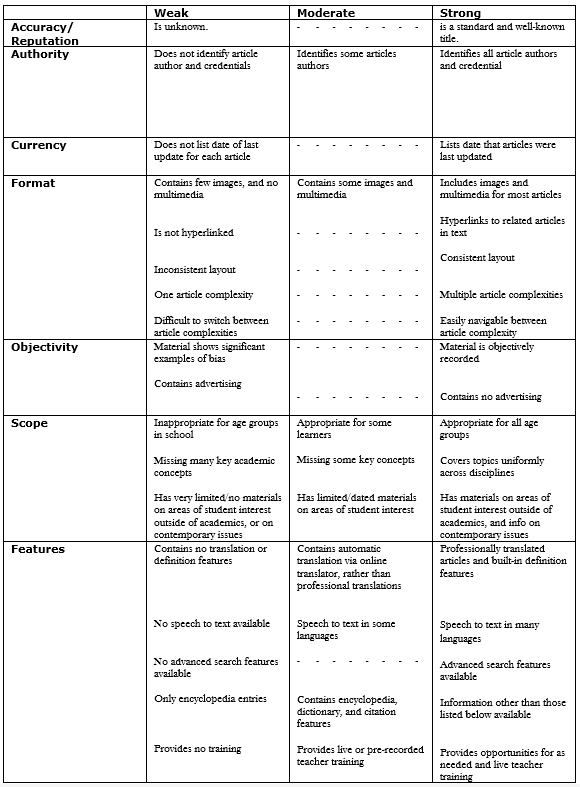
At First Glance
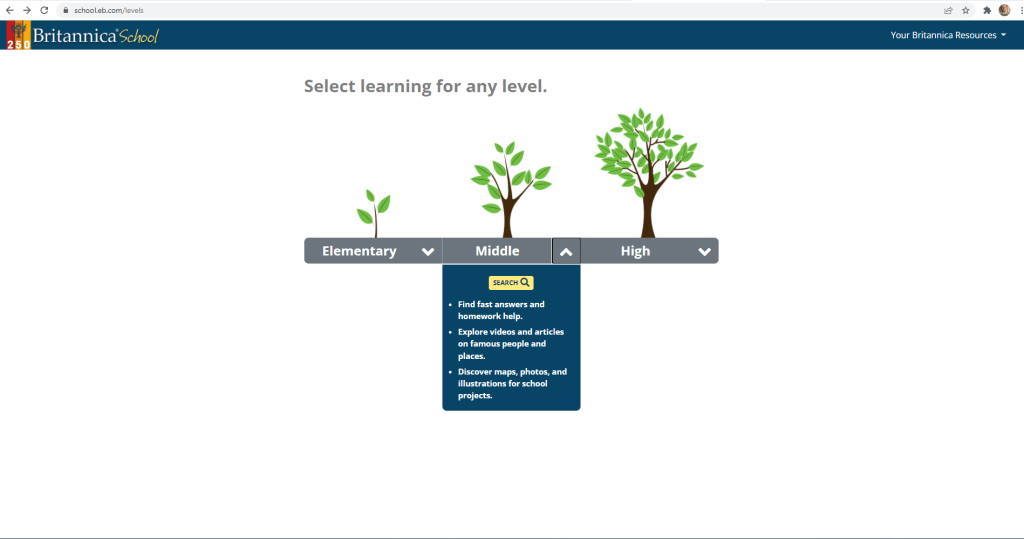
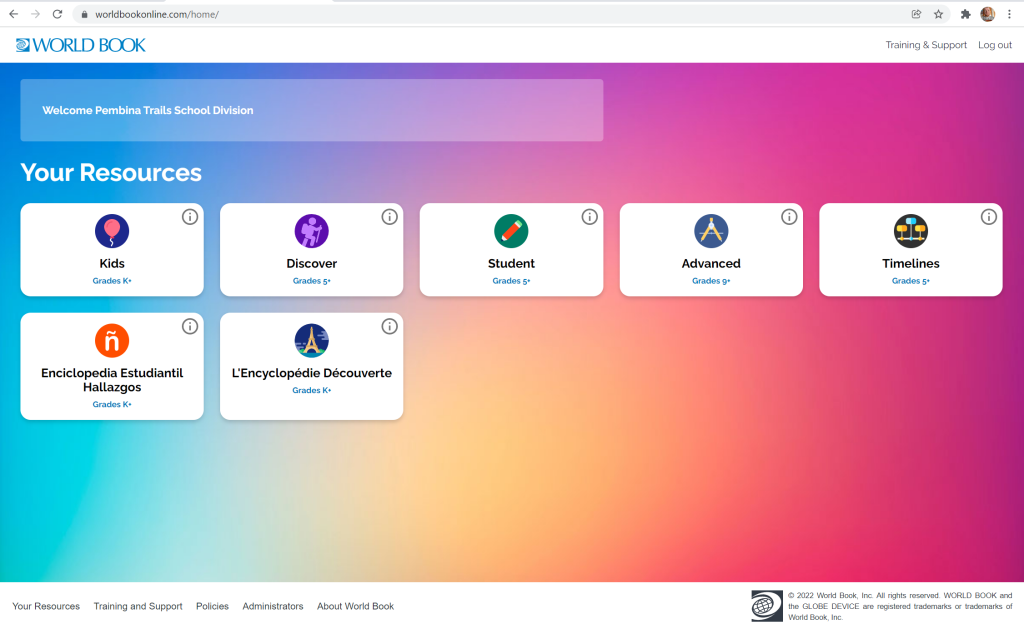
Both EB and WBO contain access to articles at 3 levels of increasing complexity. In the EB ecosystem, this is called Elementary (1), Middle (2), and Secondary (3), while in WBO, it is Kids, Student, and Advanced. The EB main pages allow for searching any level directly from this page, while the WBO one does not.
Access to other features is also available from these main pages:
| EB | WBO |
| ImageQuest (rights cleared search database) | Discover (marketed as differentiated content resource) |
| Enciclopedia Moderna (Spanish) | Timeline Builder |
| Encyclopaedia Universalis Junior (French) | Enciclopedia Estudiantil Hallazgos (Spanish) |
| Encyclopaedia Universalis (French) | L’Encyclopédie Découverte (French) |
Cost
There is a significant cost differential between the two online subscriptions. Our division, which has a student population of around 15000 students, and pays a per student cost for both subscriptions.
Encylopedia Britannica School has a total cost of $7 012 (an approximate cost of $0.47 per student).
World Book Online has a total cost of $15 834 (an approximate cost of $1.06 per student) (M. Carlos, personal communication, February 7, 2022)
The Analysis
On each picture below, slide the bar up and down to see how EB School (blue) and World Book Online (green) were rated on each criterion.
Accuracy and Reputation


Both of these online encyclopedias have long histories and positive reputations. Britannica’s reputation leans a bit more scholarly than the World Book (Grossman, 2017), but its school version does not outwardly appear to be that way. This one is a coin toss.
Authority
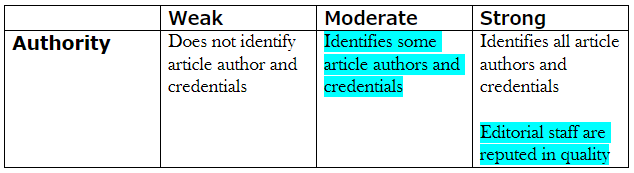
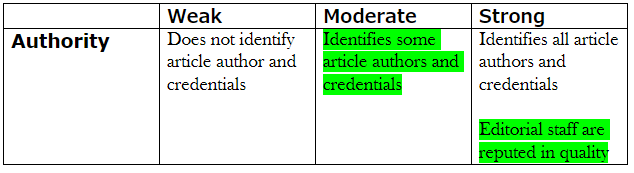
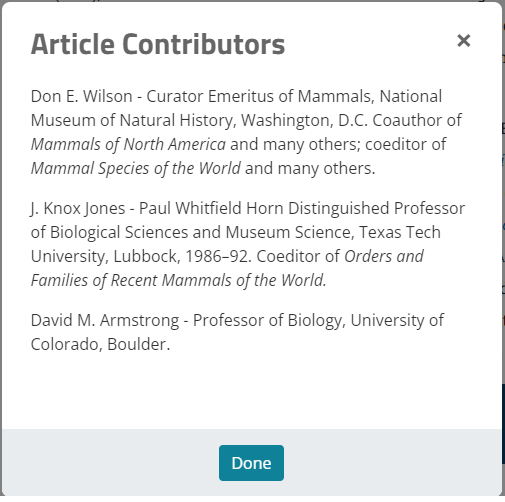
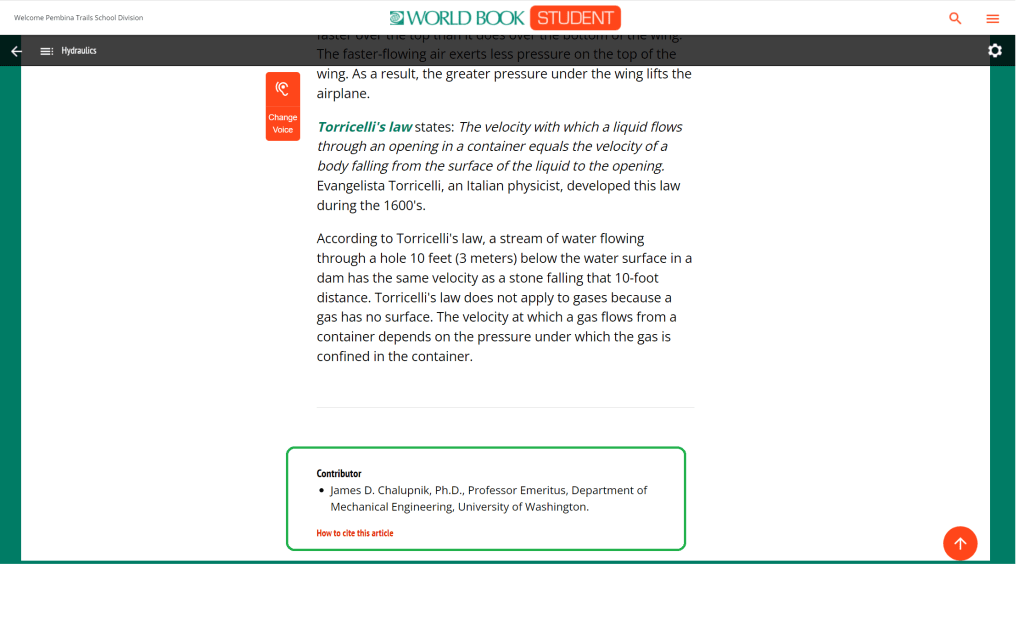
In terms of authority once again, there seems to be little significant difference. Both give author/contributor information for articles written at the most advanced levels, but do not at the Elementary/Kids ones. EB provides slightly more bio materials on the contributors, while WBO does it more consistently at the Middle/Student level. They are both homes to well-respected editorial staff.
Currency


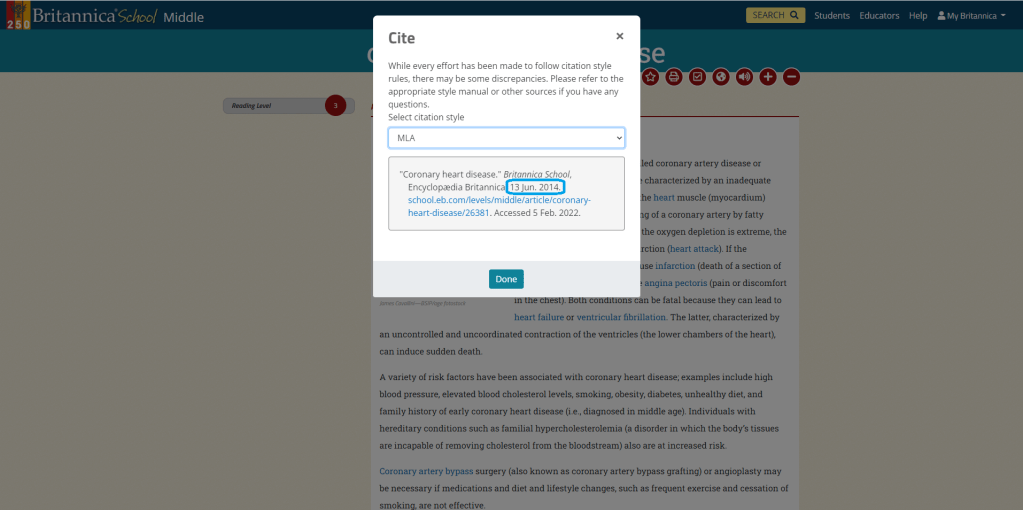
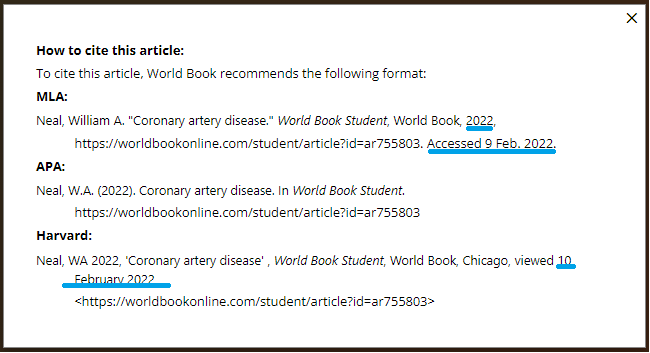
While all of the article citations I checked in WBO are listed as being from the year 2022, it is highly unlikely that they have updated their entire encyclopedia (or at least the 11 random curricular and student interest topics that I used for analyzing) in the one and a half months that have passed so far this year. All EB school entries that I checked, however, were marked with the date that the article was last updated. This is a layer of transparency that is necessary in a quickly changing world.
Format
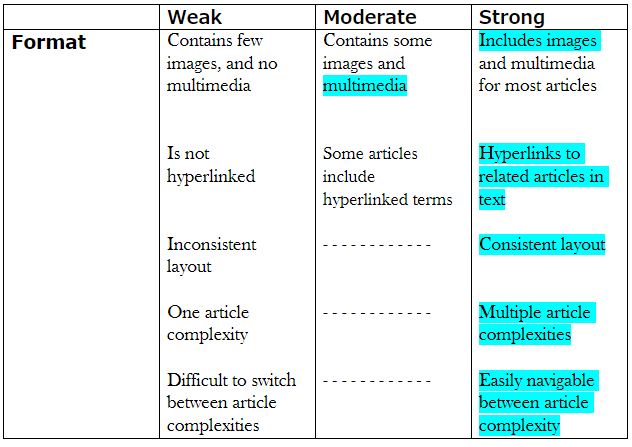
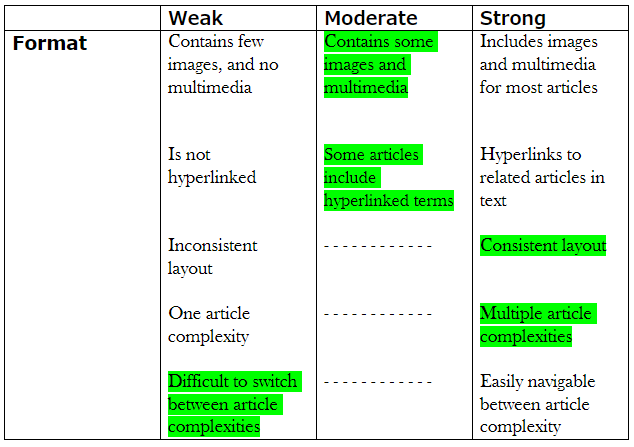
Here Encyclopedia Britannica School gets the edge. Access to ImageQuest significantly improves media access compared World Book. Interestingly, while both have hyperlinks at the upper two levels of complexity, only EB does so at the lowest one. Perhaps this is meant as a way to reduce distractions, or as a way to ensure that the built in dictionary works on all words.
EB School also makes it significantly easier to level up and down through article complexities, which you can view in the video below.
Objectivity
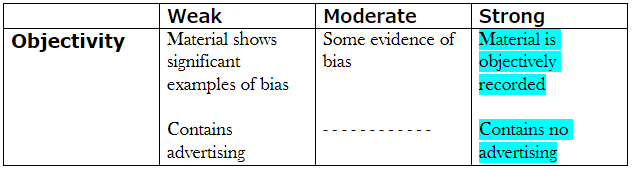
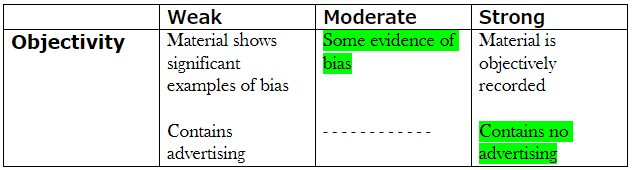
Both of these encyclopedias have significant reputations, and I really debated how to rate World Book in this manner, but I took into consideration Riedling and Harlow’s recommendation to look into coverage of controversial topics (2019, p. 23). To test this, I searched for abortion, transgender, and capital punishment in both, and received the following results:
| Topic | EB | WBO |
| abortion | * no article at Elementary level, balanced articles at Middle/High | * no article at Kids level, balanced articles at Student and Advanced levels |
| transgender | * articles at all levels | * no article at Kids level, the same article at both Student and Advanced |
| capital punishment | * articles at all levels | * no article at Kids level, balanced articles at Student and Advanced levels |
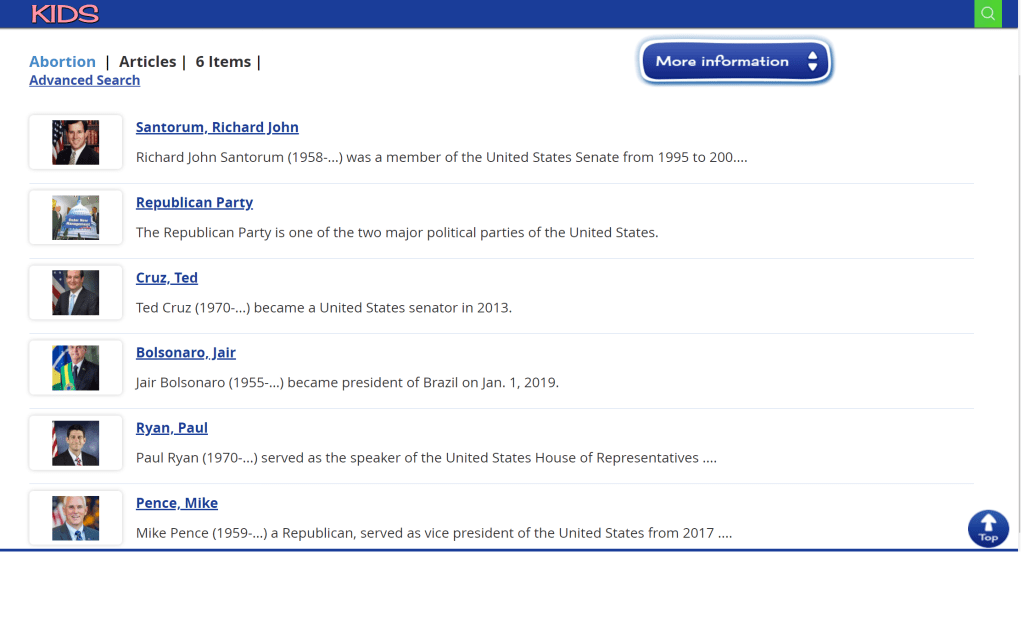
Interestingly, searching for abortion in World Book Online Kids does pull up results, but only to politicians and political parties that strongly oppose it. Also, EB School has an entry for World Book, but the reverse is not true (Encyclopedia Britannica School, 2016).
Scope
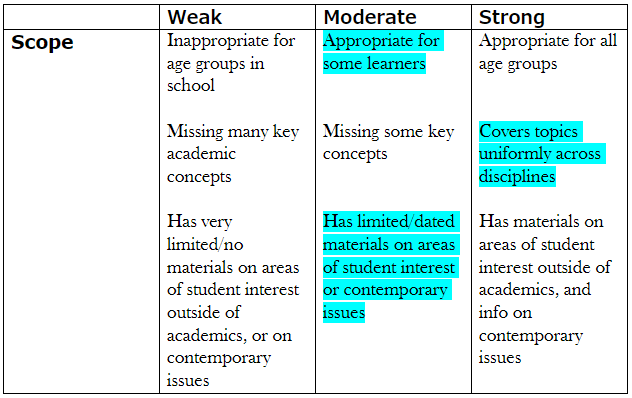
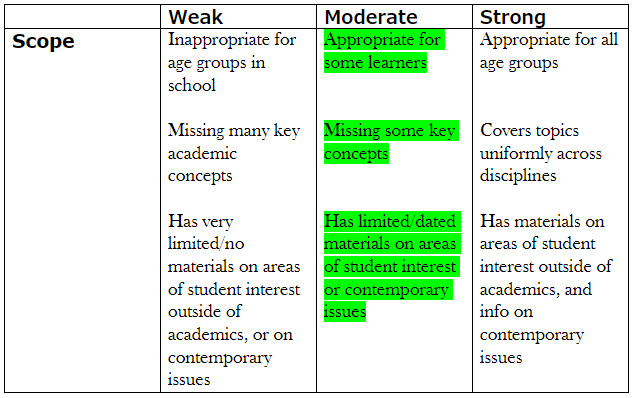
The biggest downside to both encyclopedias is that for a Grade 5-9 school, many of the articles contained within both are written at a level far outside of the independent range of younger learners. To test this, I copied and pasted encyclopedia articles out of both, and obtained readability statistics from Microsoft Word. Most materials, even from Elementary (EB) and Kids (WBO) levels were written at a Grade 8 or higher level.
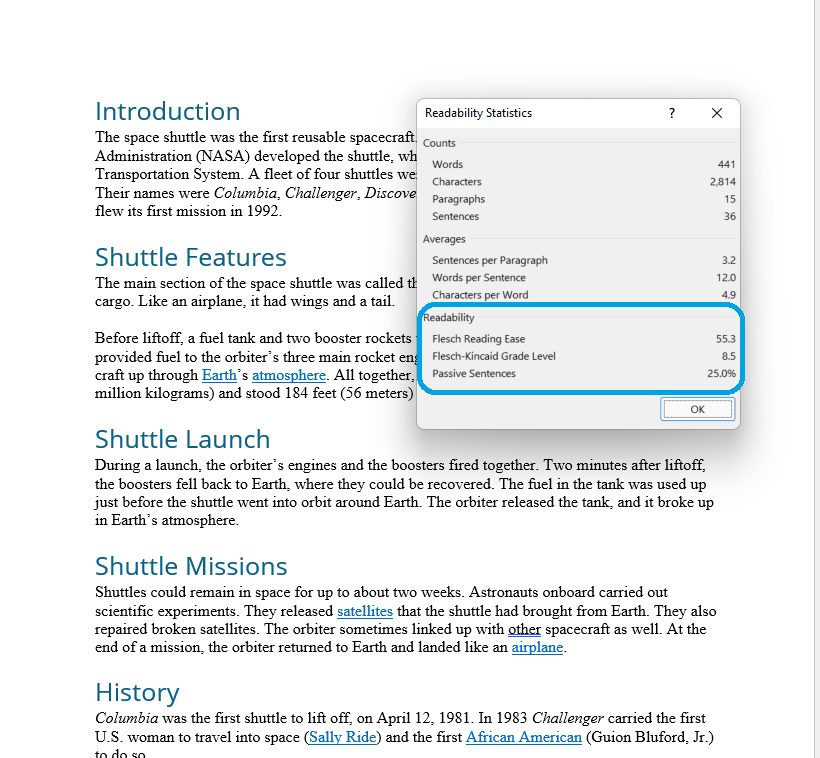
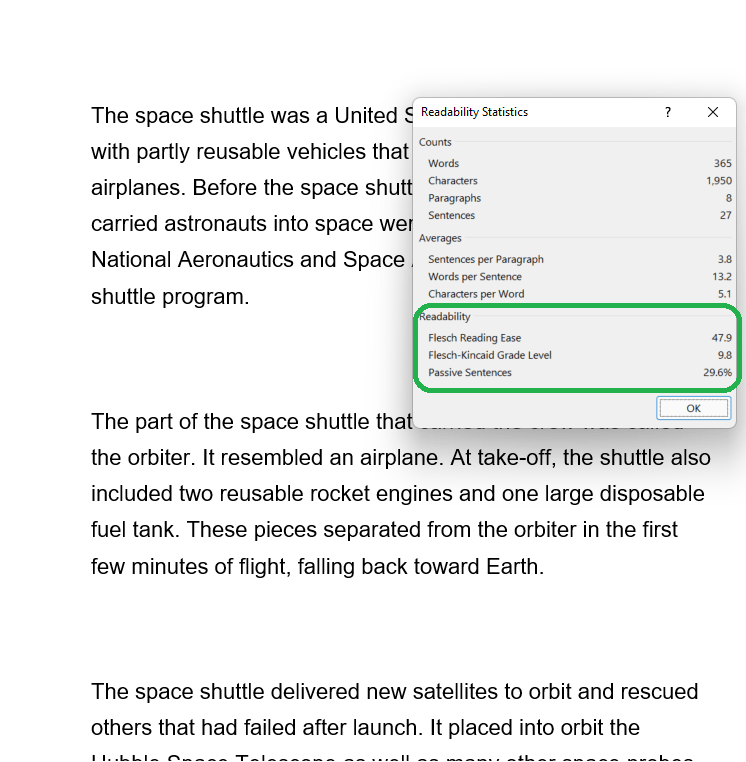
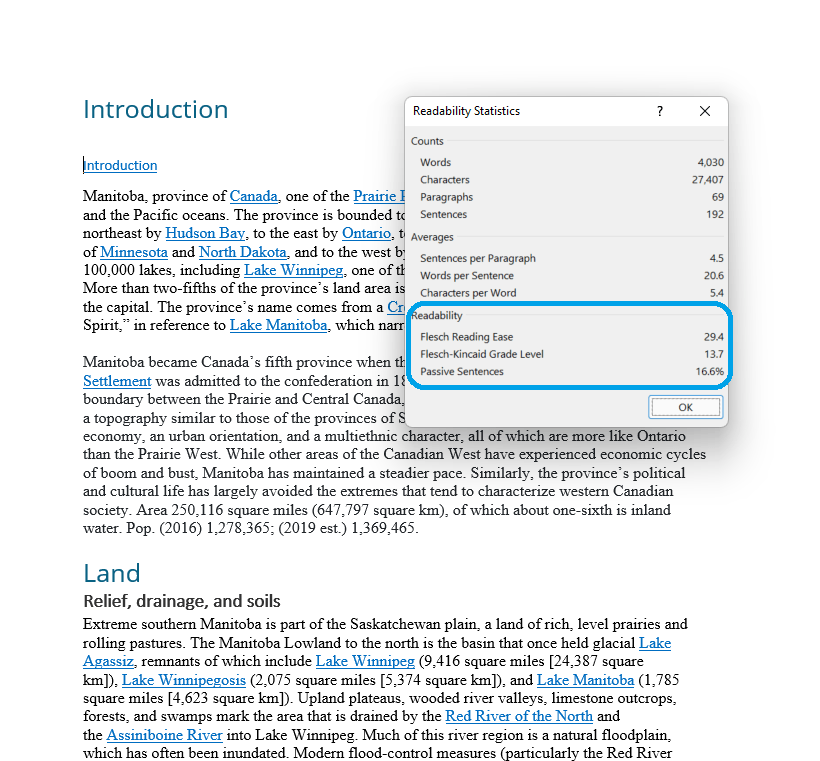
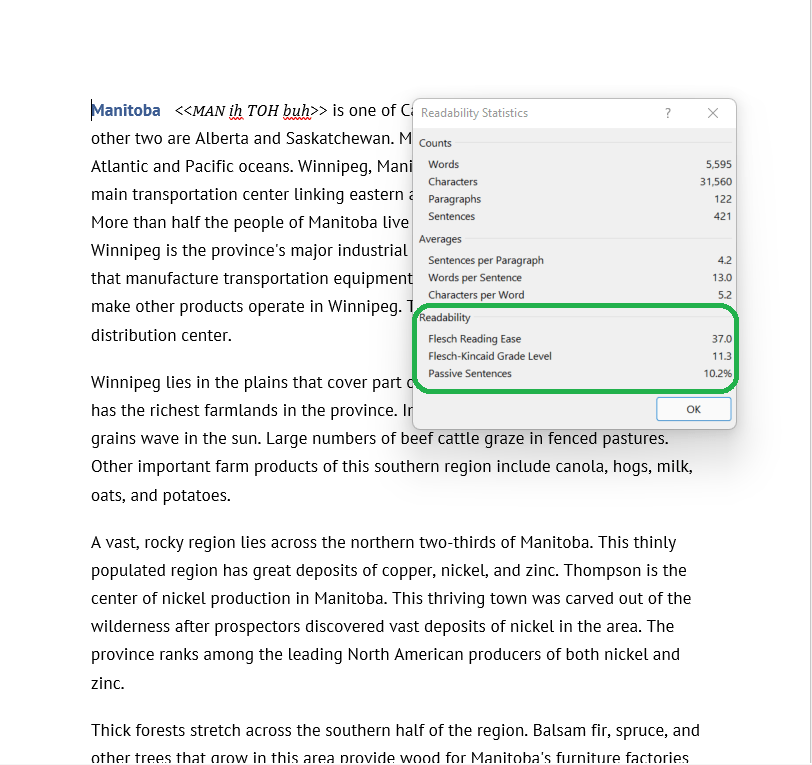
Limited materials can be found on topics like Minecraft, Roblox, or k-pop artists BTS. This is not unusual for academic resources, but it is an area that could be expanded on to improve student engagement.
Features
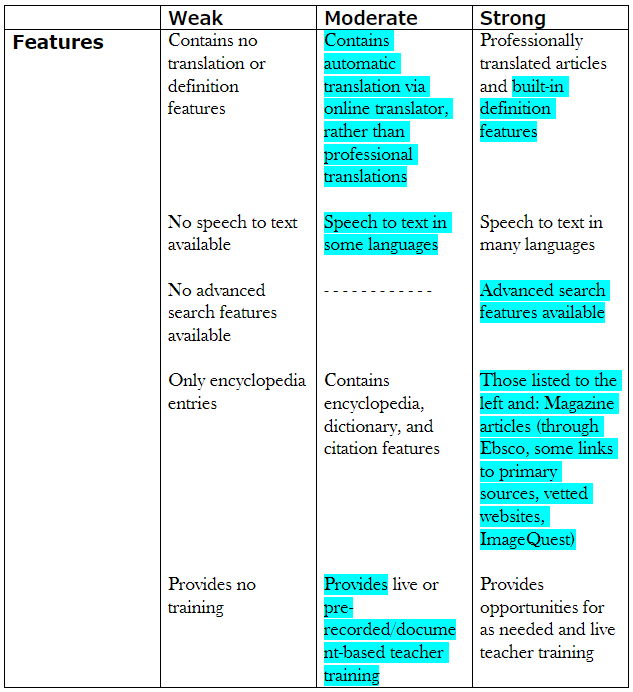
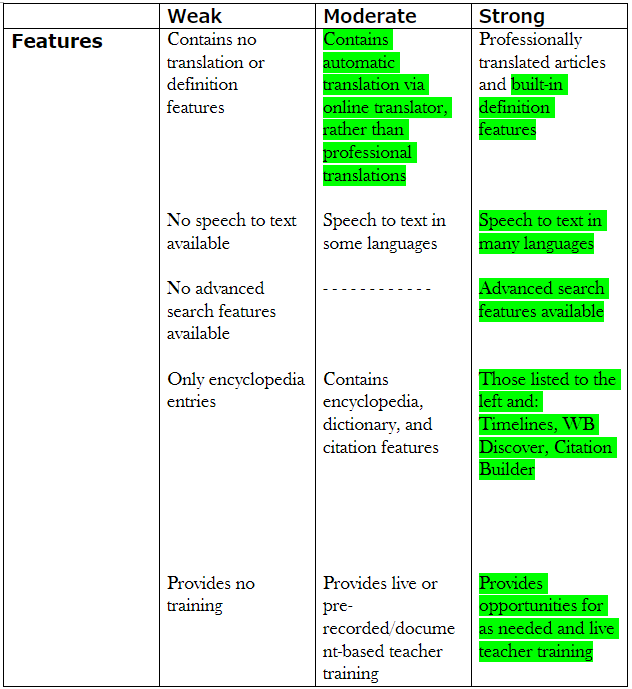
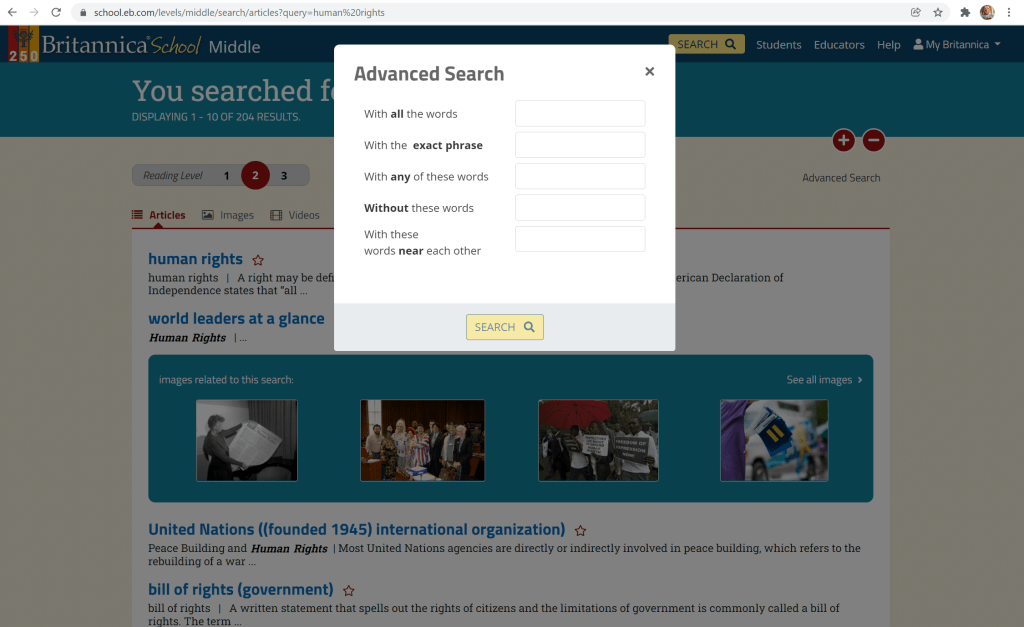
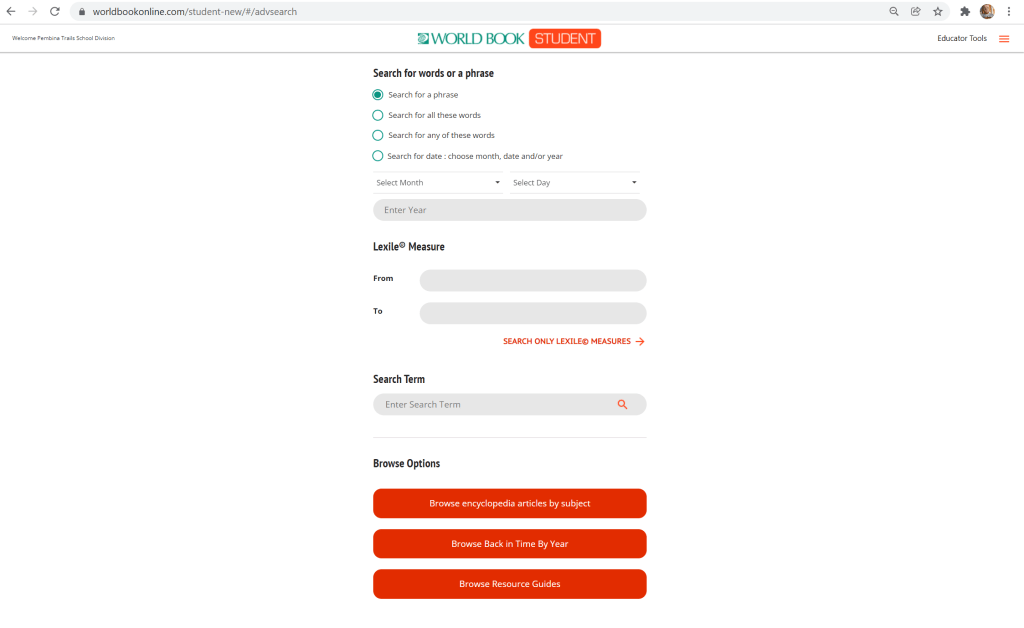
In terms of features, World Book takes a slight edge, although it should be noted that some of them look at bit dated (like its world atlas). Teacher training is also a strength, with a much more utilitarian and useful support page – that includes videos and sign-ups for online seminars. Both offer translation features, but WB stands out as having more translations that are not reliant on computer translation programs, and the ability to have articles read aloud in languages other than English, Spanish, and French. The citation builder available in World Book is another feature that EB does not have (it only provides citations for the articles and materials found within it), but it isn’t especially user friendly or utilitarian, especially when compared to free online options like mybib.
Reflection
Both of these sources are highly reputable and well respected sources of encyclopedic information. I am thankful that our students have access to both, as between the two we have significant coverage of both curricular and student interest topics, although there is room for improvement in both. EB’s ease of use and the simplicity of jumping between entry complexities, and World Book’s Translations and Voice features and advanced search functions are strengths of both that are all helpful for student differentiation and lacking in the other. While the articles themselves are quite balanced and bias free, I do worry about the search bias, and bias of omission that is shown in World Book results. Ultimately, it seems to me that Encyclopedia Britannica School comes out as a significantly better value for money, especially in a elementary or middle school where some of the pricey features that differentiate between the two are less useful.
References
Carlos, M. (2022, February 7). Question for assignment! [Email to Morgan Arksey].
Encyclopedia Britannica School. (2016, January 26). World Book Encyclopedia. School.eb.com. https://school.eb.com/levels/middle/article/World-Book-Encyclopedia/77483
Grossman, R. (2017, December 7). Long before Google, there was the encyclopedia. Chicago Tribune. https://www.chicagotribune.com/opinion/commentary/ct-perspec-flash-encyclopedia-world-book-britannica-1210-20171205-story.html
Riedling, A. M., & Houston, C. (2019). Reference skills for the school librarian : tools and tips. Libraries Unlimited.
World Book Online training. (n.d.). World Book Online. Retrieved February 10, 2022, from https://www.worldbookonline.com/training/
 themarksey blog